Monday, December 28, 2015

8 Essential Tips for Winterizing Your Home

Winter Home
The snow is falling, the fire is roaring and all your daily worries begin to melt away as you sip on a piping hot cup of tea. This is probably what you’d like to be doing during a winter storm, but things like failing HVAC systems, frozen pipes and clogged chimneys can turn your home from cozy to chaotic, all in the drop of a hat (or tree limb). To avoid annoying (and occasionally dangerous) winter related problems, here are eight essential steps to keep you happy and your house healthy:
#1 Seal windows and doors.
Everyone hates a draft--especially in the morning. Having carefully sealed windows and doors is imperative to keeping the cold air where it belongs: outside. Before winter weather hits, double-check the seals around your home to ensure they’re not leaking warm air. Also, if you have the time (and budget), look into having your doors and windows re-sealed with weather-stripping.
If you’re in search of a quick fix, old blankets or other thick linens placed under doors will work as a temporary solution. Your local home improvement store will also carry a window insulation kit to help stop leaks (if you’re into DIY projects). Checking the drywall and exterior of your home for any holes and re-caulking them is a great way to give your home an additional edge.
#2 Check your heating, ventilation, air conditioning (HVAC) system.
When was the last time you serviced your HVAC system? Since you don’t want your heating to dip-out during a winter storm, it’s important to make sure your current system is in good shape. Typical HVAC upkeep includes: filter changes, pipe/connection inspections and thermostat tests (especially if you have a smart system). Additionally, if there are issues with the wiring or face of the machine, it’s time to invest in repairs for the thermostat. Unless you have extensive experience repairing HVAC systems, it’s best to leave these repairs up to a professional.
#3 Clean chimney.
Before you build that big holiday fire in the family fireplace, make sure to have it professionally cleaned. (And by “it,” we mean the fireplace and the chimney.) Weather damage, shifting foundations and creosote buildup can lead to some pretty serious problems if ignored. Again, because of the potential cost of a do-it-yourself inspection, it’s highly advised that you have a professional inspect and clean your chimney.
#4 Inspect the roof, gutters and downspouts.
Before winter weather hits, it’s always a good idea to have your roof inspected by a professional. If any holes, leaks, or missing tiles/shingles are discovered, it’s important to have the problem fixed immediately. Also make sure your roof is properly insulated-- a lack of insulation will increase your heating bill if left unchecked.
Downspouts and gutters systems also need a thorough check to prepare for snow and ice. Gutters clogged with leaves or dirt prevent moisture from running through your system. Instead, precipitation begins to collect en-masse--causing serious gutter and siding damage. To avoid gutter issues, make sure you have them cleaned before the next winter storm.
#5 Insulate your pipes.
If you have any exposed pipes, now is the time to insulate them. Use foam, newspapers, or anything insulated (be careful, some pipes become hot and can cause fires if they’re in contact with something flammable) and wrap the pipe using duct tape to secure the covering. Also make sure that any sprinkler systems or pipes leading to a pool are insulated and turned off. Any outdoor faucets should be insulated and covered for the winter as well.
#6 Prepare the yard.
To avoid your yard becoming a springtime mud pit, take steps to keep it maintained throughout the winter. This includes: trimming trees/bushes, putting away furniture and planters, as well as periodically shoveling snow and ice away. If you need help getting rid of winter precipitation, you can always hire a snow removal service to help.
#7 Put the ceiling fan in reverse.
To keep your home warm, another preparatory step is to reverse the circulation of your ceiling fan. Doing so allows the cold air to be pushed to the ceiling, while the warm air is forced back down into the living room. When spring comes around you can always change the circulation back, but utilizing this step gives you more warmth for less money--that’s a win-win.
#8 Keep the heater temperature down.
Modern heaters are great (no hauling/splitting wood, no severe fire hazards and they actually heat your home), but they don’t have to run constantly to do their job. Try dropping the temperature at night so your heater works less while you’re asleep. This way you can optimize the heater during the day and just use a space heater at night. You can also insulate your heater to help it withstand any potential damage from freezing temperatures.


Posted on RISmedia.com by Andrea Davis

Saturday, November 28, 2015

Millennials prepare to become homeowners!


November 27, 2015

If you’re under 35 years old and hoping to purchase a home in the near future, you’re definitely not alone! In fact this last year economists reported only about 2% of millennials were among the home buyers across the U.S.! That’s pretty insane considering you are our country’s largest generation!
But according to Realtor.com, every study about millennials and housing says the same thing: You believe in homeownership as an investment.
As your future real estate agents, we care about your success! So here are ways you can prepare for the day you are ready to purchase a property:
1) REDUCE YOUR DEBT
Your debt-to-income ratio will definitely affect your options for a home loan. To qualify for a mortgage, your DTI can be no more than 43%.  So your mission needs to be reducing any large student loan, credit card or auto loan balances. And avoid new debts if possible. The ideal DTI is less than 15% of your income.
2) BOOST YOUR CREDIT SCORE
For millennials who bought a home this last year, the average FICO score was 714 (an FHA mortgage is 682). Unfortunately how credit scores are calculated make it tough for you to qualify. They look at lengthy credit histories -- not your consistency in monthly payments like rent, cellphone bills, and utilities. So do what you can to get a score between 650-750. The closer to 750, the lower your interest rates and therefore your mortgage payments.
3) SAVE FOR A DOWN PAYMENT
You’ve probably heard the ideal down payment is 20%. While it’ll certainly get you the best rate for a loan, the average millennial home buyer put down only 7%. So try to shoot for 10% and check out your options. Conforming mortgages only require 3% (if you’re a veteran you can qualify at 0%). Ask a real estate agent or lender about local down-payment assistance programs. And of course save as much as you can! You’ll not only need a down payment, but an emergency fund so no financial surprises wreck your credit while you are house hunting.
4) LOWER YOUR RENT PAYMENTS
No doubt, Colorado’s rental prices are high right now! Since the average renter spends more than 30% of their income on the roof over their head, consider paring down this expense. To prepare to become a home owner, double or triple up on roommates, settle for a smaller place, or spend a season with Mom and Dad.
And if you have questions, feel free to contact me for a no-obligation, consultation and to put together a success strategy to meet your goals.
Source: http://www.realtor.com/news/trends/letter-to-young-millennials


Monday, November 16, 2015

Just Listed in Aurora! Affordable and Adorable in Aurora...


This 2 story, single family home is something truly special.  Nestled on a corner lot and across from Pheasant Run Park, this 4 bedroom, 3 bath home, has it all. The spacious master suite, is like a retreat for rest, after a long day.  Enjoy morning coffee or tea on the deck adjacent to your master suite. Create tasty culinary treats in your spacious eat-in kitchen and dine in your separate dining area.  Are you currently in need of more space?  Re-purpose the finished basement into an additional family room, living room, or play area.  Enjoy quiet nights in the living room with friends and family or enjoy gatherings and backyard barbecues on your very own deck, surrounded by secure privacy fence.  All of this AND this beautiful home is served by Cherry Creek School District.  Call Cynthia today to schedule your private showing!

For the virtual tour and more photos, visit: www.4361SouthEvanstonCourt.com

Monday, November 9, 2015

Need to sell fast? Hire Kittens!


Well, it's cute and all....
Just when you think you've seen every possible way to market a home—from Michael Jordan's voice-over to this “babe” infested monstrosity--someone rolls in to prove you wrong. Recently, California-based real estate company SF Good Life unleashed a new listing video starring several fluffy, four-footed friends.
“Kitten Invaders” showcases the listing with buckets full of cute to boot. In the three-minute video, three sweet kitties “invade” a listing, jumping on the beds, nibbling on the well-staged house plants, wreaking general kitty havoc and, according to the video, “meowing” in the face of danger.
Viewers beware: prepare to stop drop and awwww over these fluffies, whose official names, according to SF Good Life, are Petunia, Puddin' and Lil' Fella. The video partnered with non-profit organization Toni's Kitty Rescue which fosters 700-800 kittens each year. 
So the verdict is in: need a new way to sell your home? Hire someone cuter than you to do it. Unless of course the homeowner is allergic :\ .
http://blog.rismedia.com/2015/need-to-sell-fast-hire-kittens/

Friday, November 6, 2015

8 Home Upgrades for the Non-Remodeler!


Ahhhh…remodeling. For many homeowners, they associate that word with expensive, time-consuming and messy! But you know it’s necessary to boost your home’s value. No wonder many of us wait to make home improvements until we plan to sell!
So we found some great remodeling ideas (courtesy of HouseLogic) you can do TODAY that will not hurt your budget.  Remember, you want to take as many things off your future buyer's 'to-do' list.  With the market here in Metro Denver cooling, these are some inexpensive DIY things you can do to give your home some pop and impress potential buyers.

1.  Molding: $1.50 - $8 per foot

Give your rooms a finished, classic and expensive look with decorative molding! It’s actually at the top of buyers’ list of desirable decorative features in a home (National Association of Home Builders (NAHB) survey). There are hundreds of options for moldings (designs, paint styles, materials and etc.). So you can definitely find an affordable option!


2.  Ceiling Fan: $200 to $600.

#1 on buyers’ decorative wish lists are ceiling fans! Now considered an essential component to rising energy prices, they are a great, little investment. You can choose a stylish option to complement the room and save money on AC!

3.  Mature Trees: $1,000 to $10,000

Plant a tree and you’re planting a moneymaker! What else in a home gives you more value with age? Trees will help you:
  • Boost home value by an average of $8,870 (planted street-side).
  • Save $100 to $250 in annual energy costs.
  • Beautifies the lawn (which can lower stress).
  • Prevent roof erosion during downpours and runoffs.
  • Protect your home from sun, wind and rain.


4.  Patio: $2,000+

Add extra living space under the Colorado sun with a patio! This is a terrific cost-effective way to add more square feet and WOW a potential buyer!!!  Our recommendation: keep the patio simple and functional (how often would you use an outdoor kitchen?).


5.  Security System: $50 - $1,500 (Set Up)

Installing a home security system can give you a priceless peace of mind! There are all sorts of systems out there that can fit your budget (your home insurance will give you a discount for a monitored system).


6.  Energy-Efficient Upgrades: Price Varies

Nine out of ten buyers prefer an energy-efficient home (and so will you as the utility bills get smaller)! The remodeling upgrades are nearly endless, but this is a great one: convert to a gas fireplace. You will save up to a whopping 77% on your heat (wood-burning fireplaces only save an average 15%). 

7.  Creative Storage: Price Varies

Adding storage is always appealing to homeowners, especially when it’s just a matter of using what you already have available. Why not open up some drywall and build storage cubbies between your wall’s studs? There are lots of unique ways you can add extra space like platform storage, under-the-stairs and more!

8.  Outdoor/Indoor Lighting:  $150 - $250 (installation)

Does your outdoor lighting seem a little 'meh'?  Add a new, modern light fixture in foyer or dining room.  Many of today's new light fixtures use less energy than those several years ago.  Consider updating your exterior lights as well. Exterior lighting makes nighttime more convenient, adds beauty by accenting features, and of course deters burglars. Go cost-effective by installing solar lighting.  

Source: http://www.houselogic.com/home-advice/home-improvement/budget-home-improvement-ideas/?cid=eo_em_mkt_newsletter

Saturday, October 31, 2015

Adjust your clocks, change your batteries ...

...in your smoke detectors and carbon monoxide detectors 


It’s that time of year again Mountain Standard Time goes into effect at 2 a.m. Sunday morning.
If you neglect to change your clocks, you might miss out on that extra hour’s sleep tomorrow. But if you neglect to change the batteries in your smoke and carbon monoxide detectors, the consequences could be much more dire.
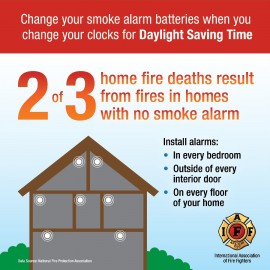
2015_1031_smoke_detectorsTwo out of three deaths in house fires occur in homes without working smoke detectors, according to the International Association of Firefighters.
And an average of 184 people die in the U.S. every year from accidental carbon monoxide poisoning associated with consumer products, including portable generators, the U.S. Consumer Product Safety Commission says.
When you change your clocks, it’s a good time to change the batteries in your smoke detectors and carbon monoxide detectors.
“Smoke and carbon monoxide alarms save lives by sounding a warning before you might otherwise know there’s a fire or a buildup of carbon monoxide,” Riverhead Fire Chief Joe Raynor said.
But they can’t do their job if the batteries are dead.
In addition to changing the batteries twice a year, when you adjust your clocks, you should also test the detectors monthly, the chief said.
And they should be replaced every five years, according to fire safety officials.

Tuesday, October 27, 2015

Colorado Ski Resorts May Open Any Minute!!


October 27, 2015
As the mountains get their early dustings of snow, skiers and snowboarders start counting the days until they get to take on the powder! So resorts are in full motion to prepare for the winter season! In fact two ski areas annually race to be the first to open for the season: Loveland and Arapahoe Basin. Temperatures need to drop enough for them to start producing snow along the slopes.
Only 53 miles west of Denver, Loveland offers 1,800 acres of terrain along the Continental Divide. They boast more snow than any Front Range or Summit County resort. They just announced yesterday morning that they will open this Thursday, October 29th. 
As one of the skiable terrains in the Rocky Mountains, Arapahoe Basin is 64 miles from Denver (just outside of Silverthorne). As they explained to 9News, they need to "go with what Mother Nature dictates" and will spread the word as soon as they can.
The rest of Colorado’s ski resorts expect to open in November and December (though the actual dates are subject to change).
  • ·       Copper Mountain – Friday, November 6
  • ·       Keystone Mountain – Friday, November 6
  • ·       Breckenridge – Friday, November 13
  • ·       Winter Park – Wednesday, November 18
  • ·       Vail – Friday, November 20
  • ·       Beaver Creek – Wednesday, November 25
  • ·       Aspen Mountain – Thursday, November 26
  • ·       +Telluride – Thursday, November 26
  • ·       Snowmass Mountain – Thursday, November 26
  • ·       Aspen Highlands – Saturday, December 12
  • ·       Buttermilk Mountain – Saturday, December 12

For the full list of resorts and the latest launch dates, check out ColoradoSki.com. 

Source: http://www.9news.com/story/weather/2015/10/05/colorado-ski-resort-openings/73411492/

Wednesday, October 21, 2015

House Hunting This Fall? 5 Questions You Need To Ask On Tour


House Hunting This Fall? 5 Questions You Need To Ask On Tour

October 2015

So you are buying a home this fall. A smart move! As the market cools down, home hunters tend to have more buying power. But as you tour homes in search of “the one,” there are a few questions you need to remember to ask (courtesy of Realtor.com):
#1 Is the home comfortable on hot days?
Be sure to learn how the home stays cool during the summer. If there’s an AC unit, why not give it a quick test. If you see the ductwork is rusting or has poor fittings, the cool air may not flow well through the home. Make sure the inspector gives you a great run down of what to expect during a 100 degree Colorado day!
#2 How does it handle ample snowfalls?
According to the Farmer’s Almanac, Colorado should expect higher than average snow this winter. All the more motivation to check a property’s drainage (gutters, drain pipes, the sewer lines). You want to make sure there’s no water backups. Steep grades (roof, yard, drive way and sidewalks) will also affect the runoff.
#3 What’s the potential noise level?
This summer when kids are out of school and the beautiful weather beckons people outdoors, what kind of activity should you expect? Empty lots nearby may mean big construction projects. Surrounded by families could mean more noise and less privacy. You want to make sure you’ll be content with a little less peace.
#4 Will it be safe to get around in bad weather?
Since the majority of injuries happen at home, this is an important question to ask. When we pummeled with snow, will you be able to get to and from your car safely? Will icy conditions make certain entrances dangerous? It’s good to know what kind of shoveling and de-icing you’ll need to do.
#5 What are the windows’ condition?
This is where a property can really cost you! If a home’s windows are old or in poor condition, this is the time to replace them. Otherwise you may need to cover them with plastic or other DIY insulation solutions to make sure you keep the utility bill minimal. Also make sure the screens are in good shape for the summer.
I always advise my clients, once they have identified "the one",  to walk around the neighborhood and introduce themselves to their neighbors.  Ask questions about the area, and questions about the weather patterns, potential for floods, etc.  Remember, weather patterns differ drastically throughout the front range...
If you would like to know more about home searching in the Denver Metro Area, give us a call today: 303-300-8989.  One of our team members would love to meet you!

Source: realtor.com/advice/buy/buying-a-home-this-fall-dont-overlook-these-6-things

Friday, October 16, 2015

September Market Snapshot...

Here's a snapshot of the September 2015 market snapshot for Colorado's Front Range area:
New Units Listed - Single Family Homes
AreaAug/'14Aug/'15% Change
Aurora891843-5.4%
Boulder County237171-27.8%
Broomfield/Westminster428355-17.1%
Douglas County979827-11%
Jefferson County936807-13.8%
Metro Denver2,2262,065-7.2%
Mountain Suburbs640543-15.2%
Northern Colorado129103-20.2%
South Metro Denver823760-7.7%
All (Totals)7,2896,474-11.2%
Median Sales Price - Single Family Homes
AreaAug/'14Aug/'15% Change
Aurora$219,900$249,00013.2%
Boulder County$350,000$364,4504.1%
Broomfield/Westminster$259,450$320,00023.3%
Douglas County$341,000$374,0009.7%
Jefferson County$273,750$312,00014%
Metro Denver$270,000$325,00020.4%
Mountain Suburbs$337,750$360,0006.6%
Northern Colorado$223,000$270,77921.4%
South Metro Denver$327,250$367,500%12.3
All (Averages)$289,122$326,96913.1%
Source: Terradatum

Monday, October 12, 2015

10 Tricky Ways to Save for a Down Payment


By Barbara Pronin 


Saving up enough money for a down payment on your first home can seem like a daunting task—and it can be. But, say consumer advocates at nerdwallet.com, you might try using a few of these odd little shortcuts to trick yourself into saving more—and faster: 

• Automatic transfers from your checking account to your savings account can help make the process mandatory—and maybe a little less painful. 

• The $5 bill savings plan. Every time you receive a $5 bill as change, set it aside. It took her 12 years, but one woman claims to have saved $36,000 with this little trick. 

• Set aside raises, bonuses, and tax refunds. It’s tempting to spend them, but think of the excitement of moving into your own home. 

• Keep the change. At least a couple of banks have variations on this theme. For example, Bank of America allows debit card users to sign up for a service that rounds up purchases to the nearest dollar and puts the change into a linked savings account. 

• Use cash rewards credit cards. Get the cash back from purchases you make and put the rebates into savings. 

• Snag a few bucks here and there. Checking account balance a few bucks over a round number? Take the extra and transfer it to savings. 

• Keep the car and save the payment. Paid off your car? Resist the urge to buy a new one and save the monthly payment instead. 

• Start fast and momentum will build. Seed your down payment fund with a birthday check or other little windfall. A quick start might motivate you to see the balance build. 

• Visualize your goal. Put big, beautiful photos of your dream house on the refrigerator or in your office workspace—and wrap a small one around the primary credit card in your wallet. You might trick yourself into charging less and saving more. 

• Use an app to track progress. Using budgeting tools like Mint, SavedPlus, Dollarbird or others may provide even more incentive to save. 

http://rismedia.com/2015-09-30/10-tricky-ways-to-save-for-a-down-payment

Friday, October 2, 2015

Winter is coming!!! Colorado homeowners get ready!


Have you heard? Colorado's winter is predicted to be below average temperatures and above average snowfall (thanks Farmers' Almanac)! Talk about motivation to make sure your home stays warm, dry and safe for the next 6-7 months! We've got some maintenance tips for you (courtesy of RISMedia):
  • GUTTERS & DOWNSPOUTS: With a lot of snow, it's important to keep leaves and debris from clogging drains. Gutter guards can be a smart and cheap investment! 
  • EXTERIOR PAINTING: Colorado's snow and ice can lead to rotting and other damage. Using a good exterior paint offers a great layer of protection.
  • ROOF INSPECTION: If shingles are seeing wear and tear, they need to be replaced STAT! You can hire a licensed professional to examine your roof (or give it a tour yourself).
  • EXTERIOR FLASHING: Double-check your skylights, pipes and chimney's flashing have no gaps or leaks. After all this season's heavy snow and ice could easily creep in!
  • WATER PIPES: There's almost no other winter hazard more costly to homeowners than a pipe burst! When temperatures drop below freezing, immediately turn off your exterior water pipes' hose bib valves and make sure they're completely drained. Wrapping them with heating tape will also save energy.
  • FIREPLACE: To avoid fires and carbon monoxide poisoning, get your chimney inspected, cleaned and repaired.
  • FURNACE & HEATING SYSTEMS: Start the season with a new filter. Consider having a licensed heating contractor inspect your unit to avoid carbon monoxide poisoning. Hot water systems need their expansion tank drained, water pressure checked and radiator bled.
  • INSULATION: Your attic can make or break your home's warmth! Make sure the insulation installed properly. The vapor barrier should be facing downward to line the rooms below. Tip: Cutting slits in the vapor barrier will allow moisture to escape (and avoid mold).

Source: http://blog.rismedia.com